
SCORE 3.82

Up In D&D (Volume 1)
Various Artists
With Up In D&D (Volume 1), the spirit of classic hip-hop resurfaces with the grit and gravitas that defined an era. Clocking in at under thirty minutes, this various-artists compilation feels less like background listening and more like a time-capsule unearthed from the wax-stained crates of a seasoned DJ.
At its core, the project is an unfiltered celebration of boom-bap’s enduring heartbeat. From the opening bars to the final fade-out, the album thrives on a textured interplay between dusty drums, crisp snares, and uncluttered arrangements that let lyricism and personality shine. Each track feels deliberately placed, creating an uninterrupted thread of rhythmic momentum.
What sets this compilation apart is its curatorial balance of names and voices. The album unites seasoned veterans and underground stalwarts, inviting them to trade verses and push one another creatively. This isn’t a showcase for commercial hooks or radio-ready singles, it’s a collective manifesto rooted in lyrical skill and reverence for hip-hop’s foundational elements.
Standout moments come from the tight chemistry between emcees who share a palpable command of cadence and wordplay. Several tracks display a mastery of classic duet and crew dynamics, where verses are passed back and forth with surgical precision. The beats are lean but potent, never flashy, always functional, serving as a sturdy stage for each artist to step forward and stake their claim.
Despite its relatively brief runtime, Up In D&D (Volume 1) carries weight. It reminds listeners why hip-hop’s raw, stripped-down aesthetic once felt so vital: the genre, at its best, was a conversation, quick with a punchline, deep with a story, and anchored by a beat that makes you nod without hesitation.
Ultimately, this compilation doesn’t reinvent the wheel, and it doesn’t need to. What it does is reaffirm the power of unvarnished expression and communal creativity, offering a snapshot of hip-hop that feels intentional, grounded, and unmistakably real. For lovers of lyricism and the classic hip-hop ethos, this is a welcome return to form.
SCORE 3.85
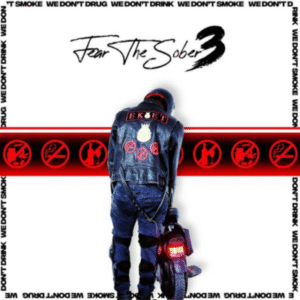
Fear The Sober 3
Stann Smith
When hip-hop takes stock of its demons, Fear The Sober 3 feels like a candid conversation in the quiet aftermath of chaos. In his third full studio effort, Stann Smith invites listeners into a world where lucidity and vulnerability coexist, and where sobriety is as much a theme of introspection as it is a lyrical motif.
Clocking in at just under forty minutes, Fear The Sober 3 isn’t concerned with grandiose production or gimmicks. Instead, it relies on stripped-down beats that center the lyrical narrative, a wise choice that underscores the album’s core strength. Stann’s voice and storytelling. Across seventeen tracks, he navigates themes of personal growth, reflection, and the lingering shadow of excess with a level of honesty that feels rare in a genre often fixated on bravado.
What makes the project resonate is its balance between vulnerability and resilience. On several cuts, Stann confronts his own history with unflinching clarity, articulating fears and regrets not as weaknesses, but as essential parts of his evolution. There’s an emotional texture here that pushes beyond rhyme and rhythm, these aren’t just clever bars, they’re confessions, moments of truth that stick with you long after the beat fades.
Instrumentally, the album stays grounded. Rather than chase glossy trends, the production leans into raw, lean arrangements that act as a canvas for the narratives unfolding on top. Subtle keys, warm bass lines, and thoughtful percussive accents give each track its own space while maintaining a cohesive sonic identity. This restraint gives greater weight to the lyrical content, letting Stann’s performance breathe and connect.
There’s also a maturity in pacing that’s easy to admire. While the album spans a generous tracklist, it rarely feels overextended. Each transition feels purposeful, as if every moment is another chapter in an ongoing story rather than filler to pad runtime. It’s a testament to the artist’s songwriting discipline that an album of this length never lingers unnecessarily.
Ultimately, Fear The Sober 3 stands out not because it reinvents hip-hop, but because it embraces a version of the genre that is earnest and self-aware. It offers insight rather than spectacle, and in doing so, taps into something deeply human, the courage it takes to face one’s own fears without the cushion of escape.
SCORE 2.77
For Immediate Release
A.D. Carson
In an age where sonic streams flood every corner of the musical landscape, For Immediate Release arrives as a focused and purposeful statement, small in duration but expansive in intent. A.D. Carson crafts an EP that feels less like a collection of songs and more like a spoken-word dispatch from the front lines of creative introspection.
Right from the onset, there’s a palpable sense that this project is driven by narrative urgency. Where many contemporary hip-hop releases race toward hooks and highlight reels tailored to algorithmic momentum, For Immediate Release instead leans into thoughtful cadence, measured phrasing, and lyrical depth. The soundscape Carson operates within is lean, precise, and deliberately uncluttered, a canvas that amplifies the gravity of each line rather than burying it beneath excessive production.
What emerges is an EP that feels both intimate and scholarly, like flipping through the margin notes of an open journal. Carson’s delivery is reflective and intentional, navigating themes of identity, cultural observation, and the artist’s place within an ever-evolving musical ecosystem. There’s a sense of dialogue woven into the music, not just with the listener, but with broader ideas about the intersections of art, society, and meaning.
Production throughout the EP supports this introspective mood without overwhelming it. The beats are textured but respectful of space, sparse enough to allow Carson’s voice to rise to the forefront, yet dynamic enough to sustain emotional momentum from track to track. Whether cruising on mellow rhythms or spiking with rhythmic tension, the sonic direction feels like a companion to the lyricism, never overpowering but always enhancing.
What makes For Immediate Release compelling is how it uses brevity to its advantage. Each moment feels deliberate, each phrase purposeful. This is music designed not merely to entertain, but to encourage reflection, to invite listeners into a shared headspace where ideas take precedence over instant gratification.
In a landscape cluttered with disposable beats and fleeting verses, A.D. Carson’s EP stands out for its intellectual ambition and emotional clarity. For Immediate Release is more than a musical snapshot, it’s a layered, resonant encounter that stays with you long after the final note.
SCORE 4.15
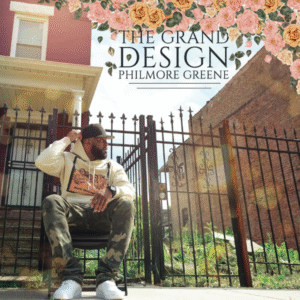
The Grand Design
Philmore Greene
In The Grand Design, Philmore Greene delivers an album that feels like a layered blueprint of intention, introspection, and artistic precision. Greene turns the studio into a reflective space, one where personal narrative and broader cultural observation interlock with agility and poise.
From its opening moments, the album signals an artist at ease with complexity. The production walks a fine line between classic hip-hop grit and contemporary warmth, a sonic framework that allows Greene’s verses to resonate without distraction. Beats shift with fluidity, sometimes minimalist and subdued, other times rich and textural, but always arranged with purpose. This restraint in production is one of the album’s defining strengths, it creates room for nuance and emotional depth.
Lyrically, Greene moves with assured confidence. His flow is thoughtful, articulate, and surprisingly intimate, drawing listeners into a worldview that’s both introspective and outward looking. Where some performers lean on spectacle or bravado, Greene’s lines are grounded in genuine reflection, comments on identity, creative ambition, and the human condition feel lived in, not performative. There’s a natural cadence to his storytelling, a sense that each track is a vignette contributing to a larger mosaic.
The sequencing of The Grand Design mirrors its thematic core. Rather than a string of disparate singles, the album unfolds with cohesive logic, themes introduced early return with nuance later, refrains shift meaning based on context, moments of vulnerability are balanced with spikes of lyrical confidence. It’s an album that rewards attentive listening, one that doesn’t reveal all its layers at first pass, but deepens with repeated plays.
What stands out most is Greene’s ability to fuse technical craft with emotional weight. The lyrics are sharp and precise, but never detached, the production is polished yet warm, never sterile. Together, they form a musical architecture that feels thoughtful and intentional, as though every bar, beat, and hook was placed with an understanding of its role in the whole.
The Grand Design isn’t concerned with chasing trends. Instead, it stakes its power on consistency, clarity, and creative integrity. By offering an album that feels both meticulously composed and authentically felt, Philmore Greene makes a compelling case for his voice, not just as a skilled rapper, but as a storyteller with something meaningful to say.
SCORE 3.95

GodJilla The Paul Bearer Era
feat. Paul Jillz & Prosper Jones
There’s a cadence to evolution in hip-hop that only reveals itself when tradition and experimentation meet with purpose. The Paul Bearer Era by GodJilla isn’t just an album title, it’s a declaration of presence. Anchored by the collaborative energies of Paul Jillz and Prosper Jones, this album feels like a moment of collision between introspection and command, producing an emotional and rhythmic arc that stays with you long after the last beat fades.
Right from the opening measures, the album signals that it’s less interested in surface level bravado and more in the architecture of sound and self-reflection. The production leans into textured landscapes, warm low ends, artful percussive choices, and spaces that breathe. This sonic intentionality gives room for GodJilla, Paul Jillz and Prosper Jones step forward not just as emcees but as narrators of their own inner worlds.
Lyrically, the album thrives on perspective. There’s a confidence in how verses are delivered, not flashy for its own sake, but rooted in a real sense of observation and emotional candor. Whether interrogating ambition, conflict, legacy, or vulnerability, the artists carry their narratives with a mature sense of nuance, never settling for the obvious. Their interplay feels conversational, as though listeners are being invited into a layered discussion rather than a single note performance.
One of the album’s most compelling qualities is its textural breadth. Tracks shift fluidly between reflective moments and assertive declarations without feeling disjointed. There’s an internal logic to the pacing, dynamic where necessary, restrained when it allows space for the words to land. This balance makes the album feel cohesive, as if every cut exists in service to a broader thematic spine.
The collaborative synergy of GodJilla Paul Jillz is palpable. His chemistry doesn’t rely on mimicry, but on complementary contrast, different vocal timbres, distinct emotional registers, and varied lyrical cadences that elevate one another. The guest features, where they occur, enhance rather than dilute this core energy, weaving additional colors into an already rich tapestry.
Ultimately, The Paul Bearer Era is an album rooted in intentional expression and rhythmic intelligence. It doesn’t chase trend driven shortcuts or fleeting hooks; instead, it stakes its claim on consistency, depth, and a dynamic interplay between sound and sentiment. For listeners who appreciate hip-hop that feels as thoughtful as it is kinetic, this record stands as a strong statement, one that feels both timely and timeless.
SCORE 4.64

“To Whom This May Concern”
Jill Scott | R&B/Soul | 2026
Jill Scott’s To Whom This May Concern arrives from a place of peace and creative freedom. The album radiates warmth, pulling listeners into its atmosphere with intentional, emotionally grounded instrumentation and vocal delivery. Its maturity comes not from polish, but from honesty.
The project moves fluidly between intimacy and uplift, with Scott’s voice carrying wisdom without preachiness. It feels like a real-time conversation—sharing lessons, memories, and joys.
Production is layered and alive, with live drums, bass, harmonies, and jazz textures blending into an immersive, unhurried sound. Lyrically, Scott thrives on transparency, exploring love, growth, and healing with relatable vulnerability. That balance gives the album deep replay value.
The pacing and sequencing create a cohesive emotional arc, while features from Maha Adachi Earth, Trombone Shorty, Tierra Whack, Too $hort, Ab-Soul, and JID add unique character. Ultimately, To Whom This May Concern is an artist fully embracing herself—timeless, personal, and emotionally resonant.
SCORE 4.46

“The Fall-Off”
J. Cole | Hip-Hop | 2026
Cole’s The Fall-Offunpacks years of pressure, ego, and reflection without ever slipping into self-pity. It’s a heavy, cinematic album that documents survival through fame, competition, and internal conflict, all while remaining deeply personal.
The production shifts from soulful to aggressive, with contributions from T-Minus, Alchemist, and others creating a cohesive, evolving sound. Sequencing feels intentional, moving from competitive hunger to reflective vulnerability as Cole revisits different versions of himself.
Features—Future, Tems, Erykah Badu, Burna Boy—expand the sonic range without overshadowing. Lyrically, Cole is transparent about exhaustion, legacy, and purpose, yet retains his technical sharpness. His rhyme structures and storytelling balance introspection with competitive fire.
The album’s patience allows songs to breathe, rewarding repeat listens. The Fall-Off is less an ending than a self-examination—ambitious, vulnerable, and one of Cole’s most complete statements.
SCORE 4.93

“Cabin in the Sky”
De La Soul | Hip-Hop | 2026
De La Soul’s Cabin in the Sky is born from memory, healing, and brotherhood. Though emotionally weighty, it never succumbs to sadness—instead, it’s colorful, soulful, and alive, celebrating legacy while acknowledging loss.
Production from DJ Premier, Pete Rock, and others balances boom-bap with jazz, funk, and psychedelic textures. The patient pacing and intentional transitions reward attentive listening, revealing subtle details throughout.
Features like Black Thought, Nas, Common, and Yukimi add depth and emotional texture. Lyrically, Posdnuos and Maseo reflect on time, friendship, and survival with creativity and vulnerability. The album balances heaviness with playfulness and gratitude.
Cabin in the Sky turns reflection into art—soulful, honest, and beautifully produced. It honors their legacy while continuing their creative spirit, feeling less like a farewell and more like an enduring brotherhood.
SCORE 4.63
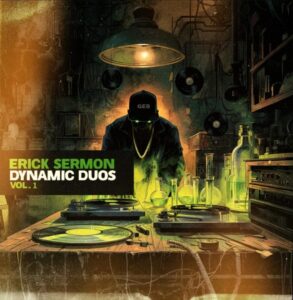
“Dynamic Duos (Volume 1)”
Erick Sermon | Hip-Hop | 2026
Erick Sermon’s Dynamic Duos (Volume 1) celebrates chemistry as hip-hop’s enduring creative force. Rather than chasing trends, Sermon curates collaborations that feel natural, competitive, and celebratory.
His warm, soulful production—rooted in tradition—gives each artist room while maintaining cohesion. Features feel invested, not incidental, with pairings built on mutual respect and stylistic complement.
Lyrically, the album emphasizes bars, delivery, and personality. Each record feels like a conversation between artists who understand each other’s strengths. The production supports without overwhelming, letting chemistry take center stage.
Replay value comes from subtle production details and clever exchanges. Dynamic Duos reminds us that collaboration is an art form—built on respect, skill, and the power of partnership.
SCORE 4.48

“World War 3”
Hittz & Ju-Blick | Hip-Hop | 2026
World War 3 is a statement of partnership and ambition. Hittz and Ju-Blick build off each other, creating unified tracks where each personality still stands out—no competition, just collaboration.
The album’s range moves between aggressive and melodic, with Hittz grounded and Ju-Blick narrative-driven. Production is cinematic but not overblown, with heavy drums and soulful textures that tie the project together.
Features enhance the duo’s chemistry rather than distract. Lyrically, honesty drives the project—declarations of purpose mixed with reflections on survival and ambition.
Cohesion sets World War 3 apart; every track feels connected to a larger story. It’s an ambitious, versatile album built on trust and shared vision—proof that great partnerships create something neither artist could achieve alone.