
Beastie Boys – Licensed To Ill
First Listen: Mayhem in Stereo
I popped the cassette in. The boombox clicked, whirred, and with a satisfying mechanical sigh, began to play.
Track one: “Rhymin & Stealin”
Boom. A Led Zeppelin drumbeat exploded from the speakers. A Black Sabbath-style riff stormed in right after. And then — the voices. Loud, bratty, nasal, and completely unapologetic. These weren’t just rappers — they were invaders. Pirates with microphones, raiding the airwaves, shouting about brass monkeys and time to get ill. I sat there, mouth slightly open, unsure if I was listening to pure genius or complete chaos.
It felt like being hit in the face with a pizza box full of fireworks. Confusing, loud, a little greasy — but totally exhilarating.
Then came “The New Style,” with its now-iconic “Mmmmm… drop!” and swaggering delivery. Next, “Paul Revere,” which told a surreal, backward narrative like some hip hop Wild West tale scribbled in a school notebook. And of course, “(You Gotta) Fight for Your Right (To Party!)” — the teenage war cry heard ‘round the world. If music was a form of protest, this felt like flipping the bird to every grown-up who ever said “Turn that noise down.”
At some point, my mom knocked on the door and asked, “What is that you’re listening to?”
I didn’t know what to say. “History being made”? “Audio anarchy”?
I gave her the classic teenage ‘I dunno’ face.
She rolled her eyes.
But I knew I was hooked.
⸻
An Album Like No Other
Licensed to Ill wasn’t just an album. It was a cultural firework — the kind that gets launched at an angle, bounces off a tree, and sets the neighborhood lawn on fire. It was messy, wild, and completely unforgettable.
Released in November 1986, it was the first hip hop album to hit No. 1 on the Billboard 200. That alone should’ve guaranteed it a spot in the Hip Hop Hall of Fame — if there had been one at the time. But what really made it special was its attitude. Produced by the legendary Rick Rubin and released on Def Jam/Columbia, Licensed to Ill was the perfect blend of rap, rock, and juvenile rebellion.
The Beastie Boys weren’t interested in playing it safe. They were more like musical vandals — spray-painting their sound all over the walls of pop culture.
Take “No Sleep Till Brooklyn”, for example — a song that somehow managed to feature Slayer guitarist Kerry King, yet still made perfect sense in a rap album. The boundaries between genres weren’t blurred — they were demolished. And the wreckage was glorious.
What’s even more impressive is how young they were. These guys weren’t polished industry veterans. They were barely out of their teens and already redefining a genre. The whole album sounds like it was recorded at 2 a.m. in someone’s basement with half a pizza, a six-pack of soda, and a deadline no one planned to meet. That unfiltered energy is exactly what made it brilliant.
⸻
Reactions: Outrage, Hype, and Legacy
Not everyone shared my enthusiasm, of course.
Parents hated it. Teachers were suspicious. Media critics weren’t sure if it was a joke or an insult. Some hardcore hip hop heads even questioned the Beastie Boys’ authenticity — after all, here were three white kids making noise in a genre born from Black and Latino communities.
But none of that mattered to me at 12. All I knew was that Licensed to Ill sounded like nothing I’d ever heard — and that made it mine. It wasn’t trying to win awards or please critics. It just wanted to raise hell and eat your snacks.
And for me, it was a gateway drug.
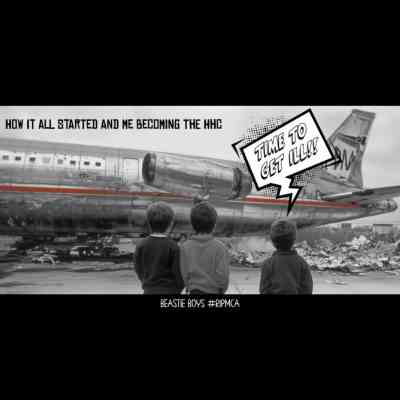
After the Beasties came Public Enemy, Run-DMC, N.W.A, LL Cool J etc. — a whole world of hip hop suddenly opened up. But it all started with that one tape. That airplane crash. That weird, magical fusion of rock riffs and rapid-fire rhymes.
⸻
Looking Back (and Still Smiling)
Decades later, I still laugh when I play Licensed to Ill. Not because it’s funny in a “ha ha” way, but because of how completely it owned what it was. The Beastie Boys weren’t trying to be anyone else. They weren’t pretending to be tough guys or philosophers. They were chaotic good. Equal parts nonsense and genius.
They mixed clever lyrics with beer-can bravado. They made fun of themselves before anyone else could. And through it all, they crafted songs that stuck in your head like bubblegum on a sneaker.
The album hasn’t aged so much as matured — kind of like that one friend from high school who still wears the same leather jacket but now also pays taxes. It’s still fun. Still wild. But now we can appreciate how cleverly it was put together under all that youthful madness.
Sometimes I wonder: what if I hadn’t picked up that cassette that day?
What if I had reached for a nice, safe Depeche Mode import instead?
Would I be collecting Scandinavian synth wave and sipping herbal tea at concerts?
Probably not. But I wouldn’t be standing in a room surrounded by over 10,000 cassettes, CDs, and records, either — each one a breadcrumb in the journey that began with Licensed to Ill.
⸻
One Cassette to Rule Them All
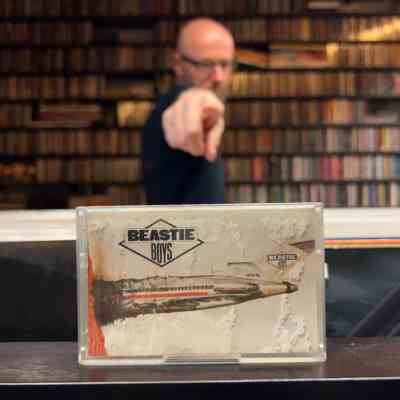
Today, that Beastie Boys cassette has a proud, prominent spot in my collection. It’s not the rarest. It’s not the most expensive. But it’s the one that started it all. The one that crashed headfirst into my life and yelled, “Welcome to hip hop, kid!”
And honestly, if I could go back and high-five 12-year-old me for making the right call that day, I absolutely would.
Probably while yelling “No Sleep Till Brooklyn!”
Because some things never get old.
Tom / Hip Hop Collector