
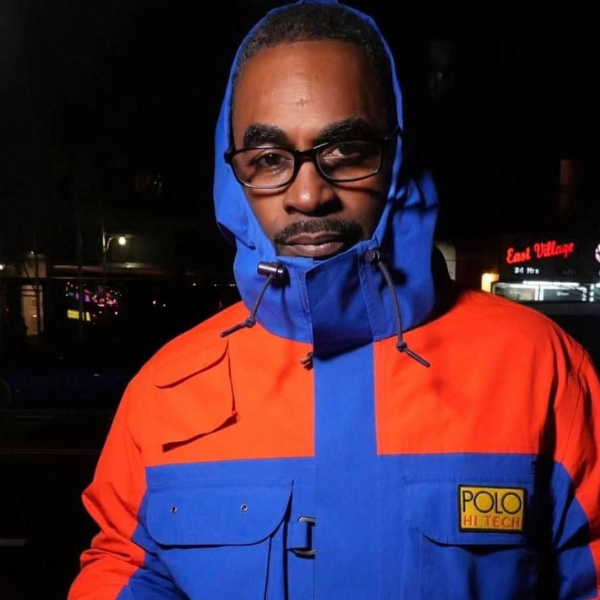
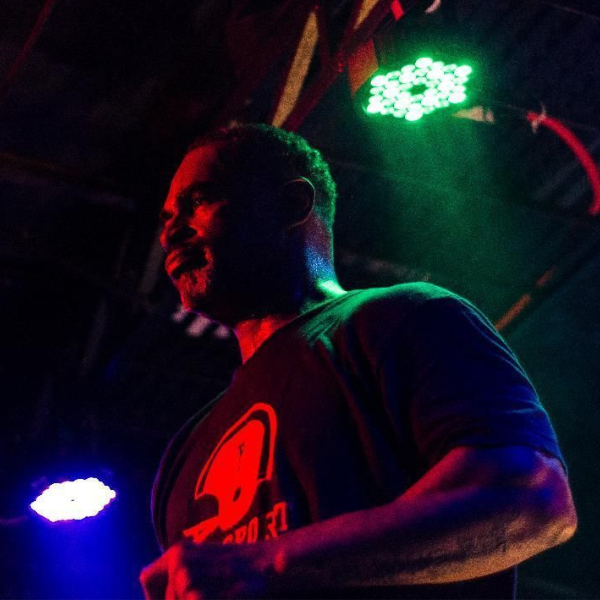
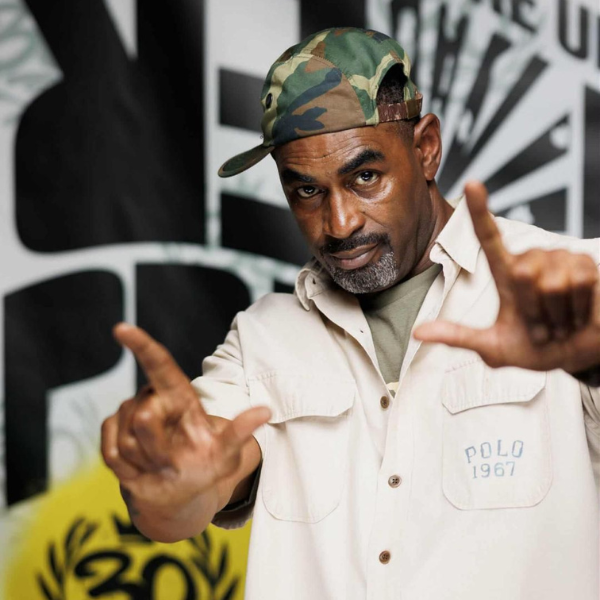
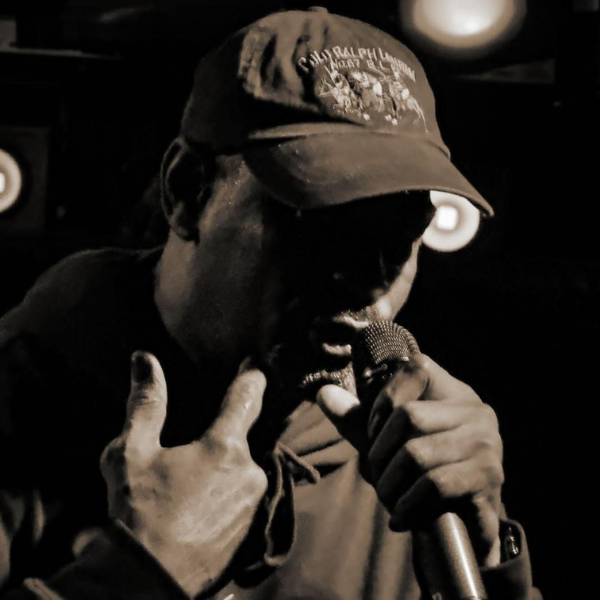
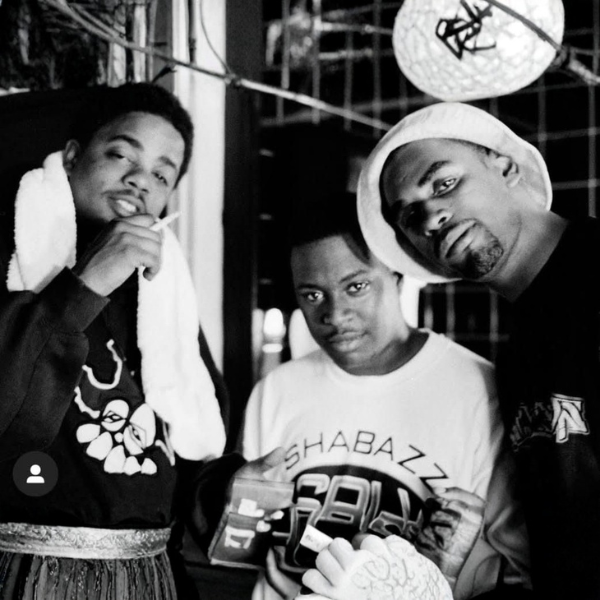
El Da Sensei: The Brick City Ambassador
Born William Williams in Newark, El Da Sensei emerged from the 1980s as a graffiti artist and b-boy who understood hip-hop as a complete culture. In the early ’90s, he teamed with Tame One to form the Artifacts. Their 1994 debut, Between a Rock & a Hard Place, delivered the anthem “Wrong Side of Da Tracks” and sparked the “backpacker” movement—kids who embraced hip-hop’s full spectrum.
El Da Sensei’s solo career flourished with albums like Relax, Relate, Release (2002) and The Unusual (2006), featuring collaborations with Sadat X, J-Live, and Pharoahe Monch. He built international bridges, working with Poland’s The Returners and Belgium’s Chillow, and won a 2015 Independent Music Award with The Immortals Project.
In 2018, he released XL with Sadat X. The Artifacts reunited for Rock Steady Crew anniversaries and released their final album, No Expiration Date, in 2022. For over 30 years, El Da Sensei has remained a tireless ambassador—championing graffiti, breakdancing, and MCing while staying true to his Newark roots and the culture’s enduring spirit.
Questions for El Da Sensei
This 8trackx issue leans into the graffiti culture. The Artifacts might be – and they are a popular choice – the most impactful Hip-Hop group to explicitly merge the two art forms, Graffiti writing and Hip-Hop music. What is your take on the interplay of these pillars and your contribution to the culture?
Me and Tame knew what we was doing. Lord Jamar from Brand Nubian ultimately pulled it out of us and helped with the hook on the demo. We recorded the song (Wrong Side of the Tracks) in Sadat’s basement with Jamar’s beat. At the first meeting with Jamar he asked us what we was about. We didn’t have anything written. So we pretty much told him, you know, Tame being a graffiti artist. Me as well. “We’re a team. We’re B-Boys. We pretty much write about that.” And what we came up with was Wrong Side of the Tracks.
For the album version, because we couldn’t create a sample, we had to use a version we created with T-Ray. This is the one the public initially heard. Once it dropped, you know, we knew what we had. We didn’t know the effect of what the song would be like to the public, but… everybody pretty much made up their minds that this was THE Graffiti anthem. And once we saw the reaction from all the writers from the magazines, it was pretty much confirmed. Huge thanks to Jamar, for pulling the song out of us.
Speak on your background. Started as a tager (correct?) and then built out from there. How did you find your place in the Hip-Hop culture as a young one through the creation of Artifacts?
I started off as a B-boy first. You know, in a neighborhood with mostly Spanish cats. And I went to see Wildstyle – that was my life! I used to go to New York with my parents and see B-Boys in the park (Washington Square). I would get out with them. Once I saw Star Wars, I was like, okay, I got into graffiti. Funny fact – my father wouldn’t let me go out and bomb walls and stuff like that. He was real strict on me. So then I pretty much got into the rap shit. As young as we were, we were trying to pick up on everything. We were active in all the elements. But once you were good at one or two… you mastered that. Just picked up everything else as you went on. So, officially, I started off as a B-boy first. Battled every person in my neighborhood, beat them. Then I just got good at the rap thing and I stuck with that.
Coming out of Newark, Artifacts didn’t just document hip-hop—you documented the visual language of it too, especially graffiti as a lifestyle, not a backdrop… when you think about records like “Wrong Side of da Tracks,” was Graf the inspiration?
As far as graffiti, that was natural, you know. Me and Tame, we lived it. But I would say Tame was the more official one out of us two because he was in there already at like 14/15 going to New York to bomb. He was that guy. He was the reason why Wrong Side became so natural to everybody because Tame pretty much lived it every day.
You know, I tell people all the time. When it comes to us two, Tame was the graph part of the group. I was the rhyme part. When people met us, they saw us tagging; they saw Tame putting up pieces. He would go out and go bombing with artists when we’d be on tour. So they saw, you know, it was real. Exactly what they saw in the video. What they got in the music and what they got when they met us.
Brick City graffiti culture was about risk, identity, and leaving your name somewhere it might get erased tomorrow… looking back, do you think Artifacts captured that feeling more as historians of the Graf scene, or as participants who were still very much in it while it was happening?
Our culture was pretty similar to New York. It was just that it was coming from here. And it was just a smaller pocket of artists that would get seen. I was pretty much Tame. Porno. Jero. Jerry Gant. Melo Max. You know, these were dudes I saw in my neighborhood when I was, you know, coming up. So, once I got to meet them, saw who they were, and understood pretty much what was going on – and soon learned that Tame pretty much ran the culture in New Jersey – I met my tribe in the hood.
Once we got to put it on wax (the songs) it was official. We pretty much embodied the New Jersey culture. People saw who we were, low-head dudes, Tame had dreds. Tame was the only artist running around with his graffiti name as his rap name! He could have got caught at any time, which he did many times! Everybody thought we were from New York. But once they saw New Jersey Transit and Newark police cars in the video. It was like, “wow, these dudes are coming from Jersey doing this!” A lot of people didn’t consider New Jersey a Hip-Hop town. We came correct and helped push New Jersey into the conversation.
More recently, you put out a song called Lab 82 which played homage to the interplay we are focusing on – is this something that is a constant for you in all the art you create? I see that the focus is also ever present in even more recent Escape The Yard project. Would you just say that for you graffiti and Hip-Hop are inseparable? How do you view the association?
I think, with that song (Wrong Side) we became the go-to guys when it came to instill the graffiti culture in Hip-Hop records. I told Tame, when we made Wrong Side of the Tracks, until we die, we gonna be known for this record. But I’ve made hella records, you know, like that Lab 82. Tame and I didn’t know that everybody would be asking for that (graffiti Hip-Hop). But, as I said, we were the first artists to do it, so I don’t mind the constant connection because this is where we came from. And graffiti is still prevalent. Prevalent in hip-hop. In the cauldron. As an element. So… you know, I’m always asked to do graffiti rap songs. And I don’t mind at all. I love it. Because this is who I am, this was who Tame was. And we’re going to always rep that.
What groups influenced you and Tame One and how can that influence be found in your respective style?
When we was coming up, we wanted to be the New Jersey EPMD. You know, our affiliation is with Brand Nubian. Das EFX, Smith & Wesson, Helter Skelter, Channel Live, all these groups. Two-man groups. My favorite artist was Chubb Rock, Special Ed. You know, Heavy D. Pete Rock and CL Smooth, The Beatnuts, all these dudes were pushing us. The Alcoholics. I could keep going. But, uh… You know, in that tradition. Me and Tame pretty much was feeding off all of these groups. And even groups before us. It was just we wanted to practice those (two-man group) rules. We saw them follow a format and we wanted to make our records in that same tradition of that two-man group, Run DMC, you know what I’m saying? This is what me and Tame strove for. This was what Artifacts stood for as well. We wanted to be a well-known household name. With New Jersey Roots. You know, when I say that, because, you know, New Jersey wasn’t even considered Hip-Hop back in the day simply because it just wasn’t New York. We wanted to take the two-man group focus and put our spin on it.
When you were coming up how did you view your participation in the culture? To get a little bit deeper – what drew you to the culture (Hip-Hop Culture) and made you want to play a role within it?
Shit, we wanted to be like everybody else, you know? Hip Hop Heroes is what we’re listening to. Once we got our opportunity, we were like, ‘How do we want people to look at us and our album and what we brought to the table?’ Working with T-Ray, Buck Wilde. EZ LP, Sean J. Perry, B-Minus, Baby Paul, and Lord Finesse – now famous producers who were just on the come up with us – so they all helped with our music and helped drive us to be great.
We were influenced by a lot of people, a lot of different artists. But we wanted to show what we had to offer. In our own way. You know, even with the producers, we were trying to find our own sound. We figured that if people are going to hear us, they’re going to hear tracks from us. Tracks only built for us and not for anybody else, you know? That was what we strived for. All the way up until Tame’s passing. We wanted to be New Jersey artists with the New Jersey sound. This is Artifact’s music. When you hear Artifacts’ music, you think of drums, bass lines.
Coming up when you did – the early 90’s – has widely been considered the ‘golden age’ of Hip-Hop. What makes people reminisce so much for this period of Hip-Hop? Why do you think many folks hold this period of time in such high regard compared to other Hip-Hop era’s?
Yeah, so the golden era is pretty much when people… got spoiled, you know what I’m saying? The Hip-Hop we was making in the 90s had a dope template. More lyrical. You know, the music was high energy. All the songs had anthems and hooks. So when you talk about this era you talk about all these records that came out and were hugely influential. Then it is no surprise you get producers who have listened to Dilla today. And what they produce winds up sounding a lot like Dilla or in the style of that. High Tech. P-Rock. You know, Cyprus. You know, Mad Lib. Flying Lotus,…..same. I could name many, many producers who listened to that time frame of music and emulated it. To the point where it’s so sonically resonant today.
Even myself, Pharaoh Mounch. Master Ace putting out records today that could have probably come out in the 90s, too, because it’s hard for us not to make the music like that because that’s what we’re used to and gravitate towards.
Following this : Is it fair to break Hip-Hop into different eras? Does this just create unnecessary and avoidable division or is some level of agreed differentiation needed, given how many different directions Hip-Hop has traveled since its inception?
You know, its been like this. Its been divided for years. The underground and the mainstream. Trap and Drill and so many other different kinds of Hip-Hop. It’s cool to have it like this because this is what being a fan is about. You choose what you want to listen to and what your style is. Everybody isn’t going to do the same thing. Hip-Hop is so diverse based on the regions that you live in. Hip-Hop in New York ain’t going to be as hot in the South, and the South ain’t going to be hot as New York. So (depending on your goals) – you have to pick and choose where you want to go. It’s kind of the gift and the curse with Hip-Hop. You’re going to follow what caters to you, but (as we all know), it’s the shit that hits different that’s gonna stand out the most.
So I try to tell people to pay attention. When they ask me for advice, ‘where you want to go first‘ is what I ask them, rather than ‘what they want to do.’ Meaning, you can’t concentrate on just having the hot 16 — you gotta have a hot record, hot album, give people a reason to want to like you. Give them a reason to want to buy your record. As an artist (if you want to build a rep and be ‘popular’), you have to strike a balance – give the audience what they want/like but make sure it is your style. With a destination in mind, I believe an artist can get there one step at a time.
If you were to find yourself talking to an interested young Hip-Hop head who knows next to nothing – but is truly down for the culture – what 5-10 albums would you give him/her so that their mind would be blown and their initial education would be on point? I’ll give you my starter pack – and as I’m weak, I could only narrow down my list this much!
- The Beastie Boys – Check yo Head
- ATCQ – Midnight Marauders
- Artifacts – Rock and a Hard Place (and no – I’m not pandering!)
- NAS – Illmatic
- WU – 36 Chambers
- MF Doom – Doomsday
- People Under the Stairs – Question in the Form of an Answer
- Bahamadia – Kollage
- Mos Def – Black on both sides
- Run the Jewels – 1
- Fugees – The Score
- Pharcyde – Bizarre Ride
- Atmosphere – You Can’t Imagine How Much Fun We’re Having
- Organized Confusion – Stress
- The Roots – ….you want more?
- De la Soul – Stakes Is High
- Jurassic 5 – Quality Control
- Common – Resurrection
- Aesop Rock – None Shall Pass
- Ice Cube – The Predator
- Snoop Dog – Doggystyle
- Dr. Dre – The Chronic
- Childish Gambino – Because the Internet
- Outcast – Southernplayalisticadillacmuzik
- Pete Rock – Lost & Found: Hip Hop Underground Soul Classics
- Gangstar – Hard to Earn
- KRS One – Return of the Boom Bap
- Pete Rock and CL Smooth – Mecca and The Soul Brother
- Erick B and Rakim – Follow the Leader
Yeah, man, that was a good list. That was a very good list. I don’t know. I probably have to say Public Enemy, Yo, Bum Rush the Show. Big Daddy Kane, Half Stepping. Cool G Rap, Road to Riches album. Brand Newbian, And All For One and Foundation albums. Pete Rock & CL Smooth, Mecca and the Soul Brother. Gang Starr, Daily Operation. Cypress Hill, first album. Alcoholics’ first album. Beatnuts that first EP. Yeah, that one was crazy. I don’t know how many that is! Heavy D, Blue Funk album. Sadat X, Wild Cowboys album. Showbiz and A.G., Goodfellas album. Cella Dwellas, Realms ‘n Reality album. Yeah, man, I could go down a whole bunch of records right now, but yeah, those… I would try to start with those. And Artifacts first album. No order, but definitely I’ll throw us in there as well.
Why do you think there is division in the Hip-Hop world such that there seems to be constant tension around Hip-Hop – Underground vs. Commercial vs. Mainstream? Any insight from your side of the fence?
I think the division comes from the desire to have Hip-Hop in the way that it “used to be”. Because we also had those fights, you know, with our records and in our era. The machine against the underground and/or the mainstream against the underground. You know, people fight to be fans of these artists and they want to see them do good. They want to see their records sell well, just like a lot of these artists that’s in the mainstream. This has been a constant battle.
You know, I think that’s the struggle of the fans. They want to see the artists that they like to be presented in the same way as the mainstream artists. Sometimes they break through. Most times they just slide under the radar. Being independent is always going to be hard. The fan doesn’t necessarily understand this. When they see us putting records out, they see us doing what we’re doing. But they are trying to figure out why it’s not as popular as the mainstream because it’s the mainstream – with a machine helping push certain work forward. You know what I’m saying? It’s just you gotta get in where you can fit in (as an independent) and the fans need to support the artists without the big backing in order to keep it going.
Can you speak on the differentiation that gets thrown around when people talk about ‘lyrical rap’, ‘backpack rap’, ‘party rap’, ‘emo rap’ , ‘gangster rap’, ‘mumble rap’ etc…. Do people just like to categorize as it makes it easier to digest all the styles out there? Or is it something more sinister?
You got different kinds of artists for different people. You know what you got. Not one style is the best style. You know what I’m saying? We now have all these different brackets of Hip-Hop, and it’s good to have it that way in a sense, because it wasn’t like that before. Earlier, we didn’t have a choice— you know, you just put the records out and hope people get it. Now, you can direct a promotion to certain people that you want. You can have an algorithm that caters to people’s interests. There are a lot of different tools to direct your music to who you want it to go to. It’s up to you as an artist to promote your music. You know, it’s about investment in yourself just as much as these labels invest in their mainstream artists. Underground artists gotta do the same thing if you want to be as popular.
The elements of Hip-Hop – there were the original few and for this magazine we have expanded to include some new ones – do you believe the elements are still important to the Hip-Hop story and what is your view on how they play out in today’s climate?
I think it’s always important to use the elements in songs and albums. Because there’s not enough people doing it. You know, there’s a “formula” that we used when we made records that I still use today. Artists today don’t record the same. It’s not the same equipment. You know, everything is high quality (recording-wise) and even if it’s not, it can be. I think, with the way everything is built, it’s harder for you to fail, but harder to stand out.
Please give us some examples of what you listen to today that might be termed as New School Hip-Hop – what new artists currently have your ear?
I listen to a lot of new hip-hop. I love Skyzoo. I still listen to artists from my past. Pharoahe Monch. Smith & Wesson. Um… You know, that’s still new school to me. All of the records that came out on Nas’ label on Masterfield. You got older artists putting out just as much new music as new artists. I listen to Griselda. I still play mixtapes. Little mixes from my man DJ Chaos, who recently passed away (RIP). I do a lot of Serious radio. The Halftime show with DJ Eclipse and Riz, Jazzy Jeff’s Lunchtime show on YouTube. So, you know, I get a good mixture of new music and old Hip-Hop. But, being that I come from the golden era, I’m always going to fucking with the gravitational pull of the older sound.
You’ve traveled the world thanks to your art – how does Hip-Hop hit different in places outside the US?
I go to Europe all the time, all through the year. They love Hip-Hop outside of America. Because of the internet, they’ve (non-Americans) have been able to keep up with a lot of stuff. They order everything online. So when we go out there, and they get to meet us, you know, they say they never thought they’d get to see me live.
I travel and do shows more in Europe than I do in America. I’m trying to change that, but that’s the demand, so I can’t complain. They come to the shows. And because I’m older now, I got a lot of fans that’s from that age. Older, bringing their kids to the shows, bringing their nephews, daughters and shit. So people come to listen to a lot of the old stuff, but then they know I got new music as well I can hit em with.
So yeah, definitely going overseas is a big part of why I still do what I do. And why I’m still able to make records.
Final question – thoughts about where Hip Hop is going? Is it healthy? On life support? In need of reform? Or just doing what its gonna do?
Hip-hop is really healthy right now. There’s a lot to choose from, even though there’s a lot of bullshit out there; there’s a lot of good stuff. With these opportunities still out there, it keeps me working. It’s just that you gotta have good people around you to point you in the right direction. Fortunately, I do.
I would definitely, definitely say hip-hop is not on life support because for a 55-year-old artist like myself, using the same tools that the young cats are using, continuing to push records is great.