
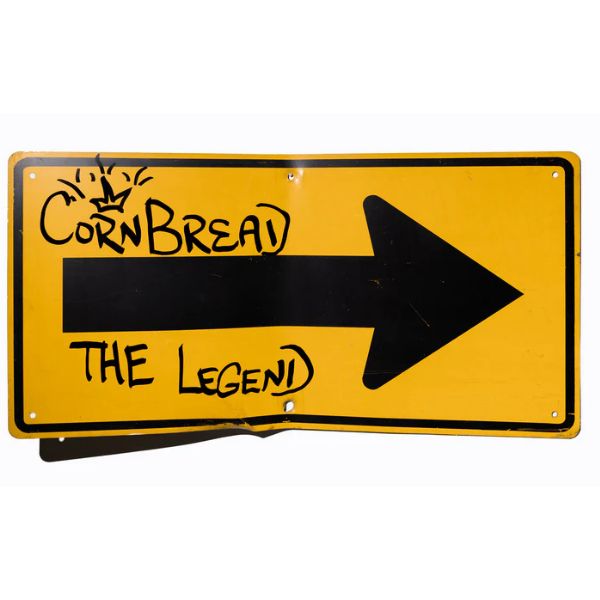
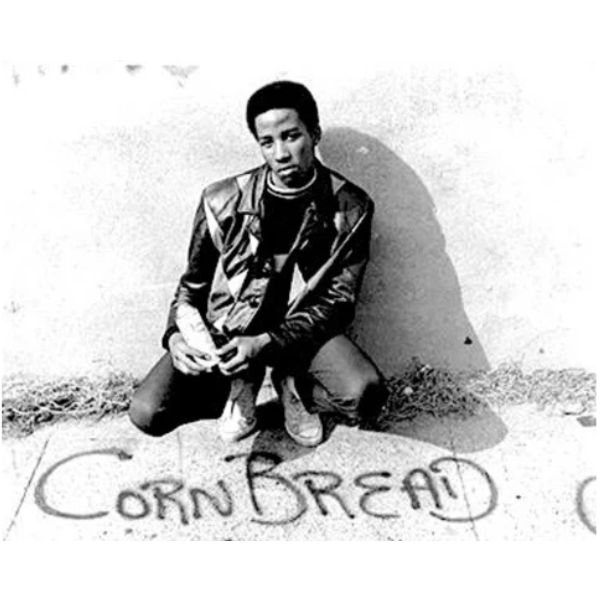
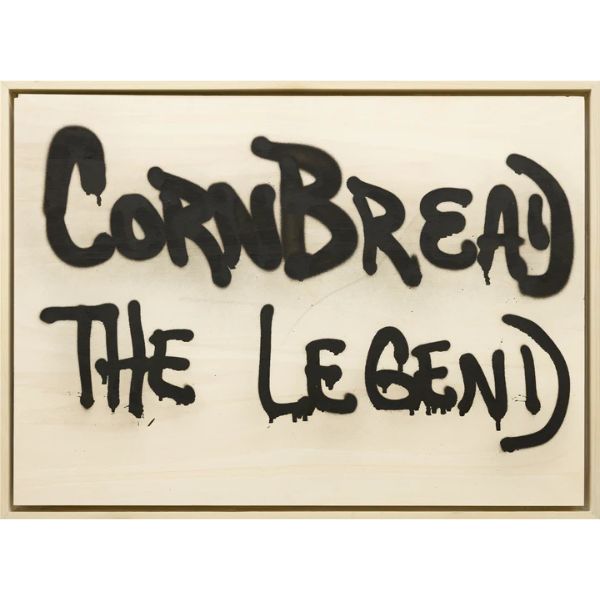
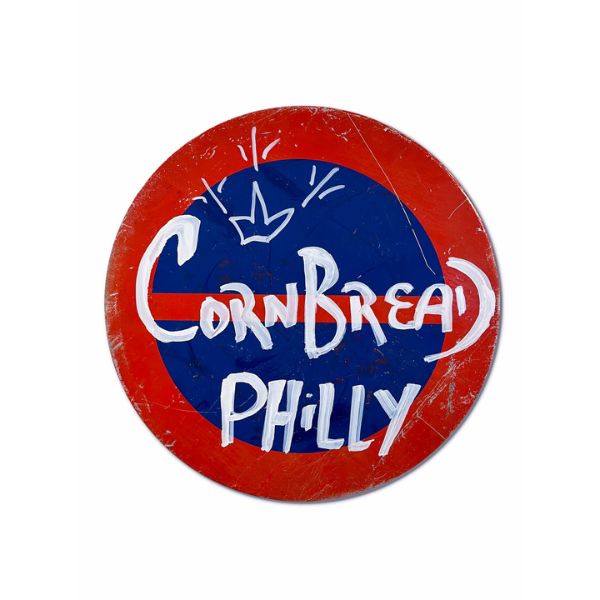
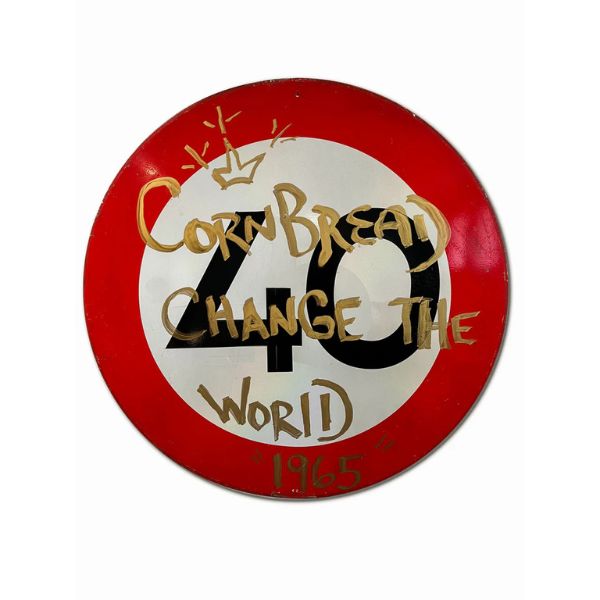
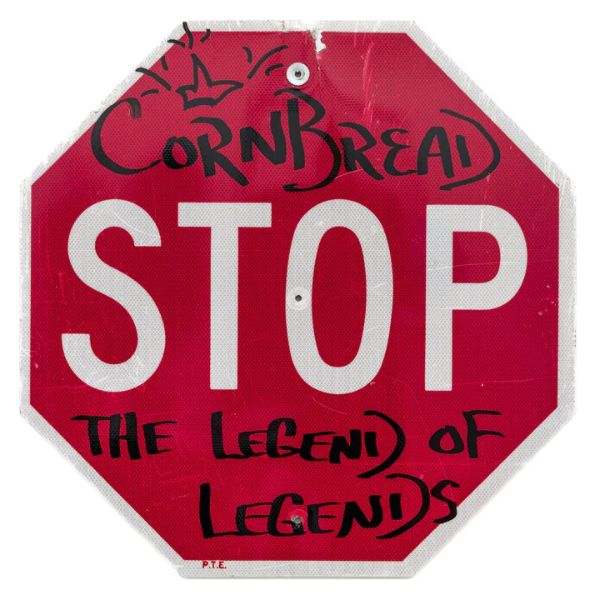
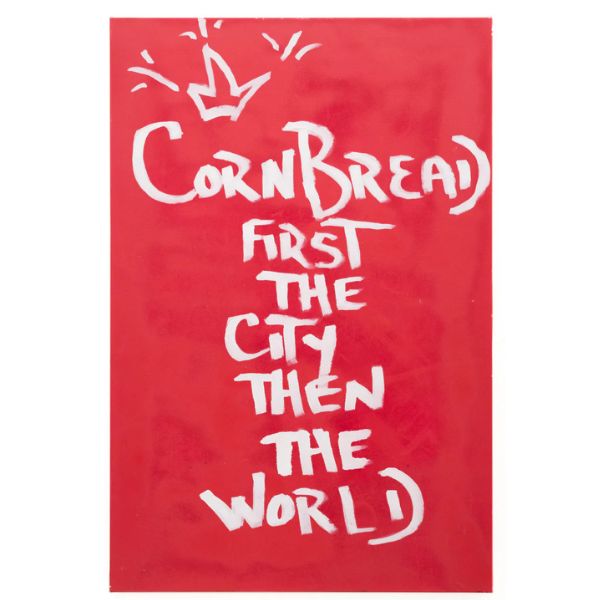
Darryl “Cornbread” McCray (b. 1953) is the Philadelphia graffiti writer widely regarded as the world’s first modern graffiti artist, pioneering the “tagging” element of hip-hop culture. He began writing his nickname on walls in the late 1960s while at a juvenile corrections facility. Now a public speaker and youth advocate, he works with Philadelphia’s Mural Arts Program and speaks on his past struggles with drugs and the law.
Darryl “Cornbread” McCray: When a Name Became a Movement
Before graffiti had a name, a scene, or a rulebook, there was a kid in Brewerytown, Philadelphia, moving through the city with one simple goal—be seen. Darryl McCray wasn’t reacting to a movement; he was acting on instinct. While most writing on walls at the time was about gangs and territory, he broke that pattern by putting his own name everywhere, turning identity into presence and presence into reputation.
It wasn’t random—it was personal. Writing became a way to process life, loss, and isolation, while also building something larger than his immediate environment. Bus routes, trains, and street corners became his reach, long before anyone thought of the city as a canvas. What started as repetition became recognition, and what started as a name became a story people began repeating without knowing the person behind it.
The important shift wasn’t just visibility—it was meaning. “Cornbread” stopped being just a nickname and became a signal that someone was intentionally shaping how they existed in public space. There was no blueprint, no audience strategy, just repetition, placement, and intent.
Over time, that same energy helped lay groundwork for what would later be called graffiti culture, even as other cities expanded and redefined it. But Philly’s role sits at the root—less polished, more direct, closer to origin than evolution.
Today, that same origin story feeds forward through public speaking and youth work connected to Philadelphia Mural Arts Program. The message now isn’t just about writing your name—it’s about understanding why you’re putting it there in the first place.
Cornbread remains less a brand than a starting point: proof that one name, repeated with intent in the right environment, can shift from being noticed… to being remembered.
Q: Before people called it graffiti—before there was any blueprint for what this could become—what did writing your name around Philadelphia actually do for you on a personal level?
Darryl McCray [Cornbread]: To be perfectly honest, there was a blueprint for what this would become. During my time in a juvenile facility, I spent a lot of time studying poetry and my brother’s love letters. I began incorporating those elements into my own writing and eventually wrote letters for other residents, which earned me respect inside the institution.
At that time, the walls were covered in gang names. To stand out, I started writing “Cornbread” in large, bold letters next to every gang tag. I also recited poetry to everyone—gang members, teachers, and medical staff. By “bombing out” the institution, I gained attention and recognition.
My name was everywhere—from the cafeteria to the church. Because of that, I was given a choice: clean it up or go to solitary confinement. I chose solitary, and that earned even more respect. When I got out, I went right back to it.
Eventually, they sent me to a psychiatrist. He noticed my name was everywhere and asked why. That’s when I realized what I did inside those walls could be taken much further. I told him then—I was going to set the world on fire.
Q: “Cornbread” became one of the most recognizable names in street culture, but when that nickname first followed you out of juvie, what did it mean to you then—and how different is that meaning now?
Darryl McCray [Cornbread]: When I got out of the Youth Development Center, I stayed true to that vision. I walked bus routes all over Philadelphia every day, writing “Cornbread” everywhere I went.
Not long after, my grandmother passed away. She was the one who baked cornbread—the same cornbread I devoured growing up. Then my mother died too, and my world fell apart.
Back then, we didn’t use the word “graffiti” because it didn’t exist. The only writing on walls came from gangs marking territory. We didn’t call it hip-hop either, but Philly already had its own version of that culture.
For me, writing became therapy. It helped me keep my sanity. It took my mind off the pain. I stayed moving, writing, creating.
I covered the entire city—bus routes, trains, subways. I even used fluorescent spray paint so I could see my name in the dark. Nobody else had that mindset. I was chasing recognition, building a reputation.
I was in my own lane, marching to the beat of my own drum. I was the first person writing his name everywhere just to be known.
It meant everything to me then—and it still does now.
Q: Everybody knows the “Cornbread Loves Cynthia” story, but emotionally, what was really behind that run—young love, ego, loneliness, a need for attention, or simply the desire to be unforgettable?
Darryl McCray [Cornbread]: That was all of it at once. I was young, I wanted to be seen, and I wanted to be remembered. Writing her name was personal, but it also became something bigger than I expected. It turned into a statement.
Q: Looking back at Philadelphia in the late ’60s, what was happening in the city, on the blocks, and in the energy of the streets that made it the perfect place for your voice to appear on walls before the world even had a name for it?
Darryl McCray [Cornbread]: The city was raw. The energy was there, but nobody was thinking like I was thinking. People were writing gang names, but not for recognition the way I was doing it. I saw an opportunity to stand out in a way nobody else had imagined.
Q: At what point did you realize you weren’t just marking space anymore—you were creating a character, a reputation, almost a living myth people talked about even when you weren’t in the room?
Darryl McCray [Cornbread]: When people started talking about my name like it was everywhere—that’s when I knew. When I didn’t have to be there, but people still knew who Cornbread was, that’s when it became something bigger.
Q: When people talk about the roots of graffiti and automatically jump to New York, do you feel overlooked or misunderstood—or do you see Philadelphia’s role as something deeper than simply “being first”?
Darryl McCray [Cornbread]: Philadelphia’s role is deeper than just being first. This is where it started. I don’t focus on being overlooked—I know what I did and what it means.
Q: The “Cornbread Lives” elephant story has become almost larger than life—what do you remember most vividly about your mindset when you decided, “I’m not letting the city bury me that easy”?
Darryl McCray [Cornbread]: I wasn’t going to let my name disappear. That was the mindset. If they thought I was gone, I had to prove I was still here—and I did it in a way nobody could ignore.
Q: Between the elephant, the Jackson 5 jet, and other high-risk missions, what separated a regular tag from a statement piece in your mind—and were you already thinking like an artist, a strategist, or both?
Darryl McCray [Cornbread]: It was about impact. Anybody could write a name, but not everybody could make people talk. I was thinking about where it would be seen and how far it could go. That’s strategy.
Q: Your name didn’t just travel—it changed the way people wrote. When you moved beyond plain block letters into something more fluid and stylized, were you consciously creating beauty, identity, or your own signature language?
Darryl McCray [Cornbread]: It was about identity. I wanted my name to stand out and be recognized anywhere. That’s how style comes—when you’re building something that belongs to you.
Q: Many people see graffiti as rebellion, but your story also carries humor, heartbreak, creativity, and survival. What part of the Cornbread story do you think people still fail to fully understand?
Darryl McCray [Cornbread]: People don’t always understand that it saved me. It wasn’t just rebellion—it was survival. It kept me going through everything I lost.
Q: Now that you’re speaking to young people and working through community art, what do you try to teach them about the difference between simply making noise and actually leaving a meaningful mark?
Darryl McCray [Cornbread]: I tell them it’s about purpose. Anybody can make noise, but not everybody can leave something that lasts. You have to know why you’re doing it.
Q: When you reflect on your full journey—from a kid trying to be seen to a man whose name helped shape a global movement—what do you hope people feel beyond the legend when they hear “Cornbread”?
Darryl McCray [Cornbread]: I want them to feel the truth behind it. It started with a kid who wanted to be seen, but it became something that changed the world. That’s bigger than me.