
Mad different methods: The Case for Hip-Hop Progressivism
Dear old (& new) heads,
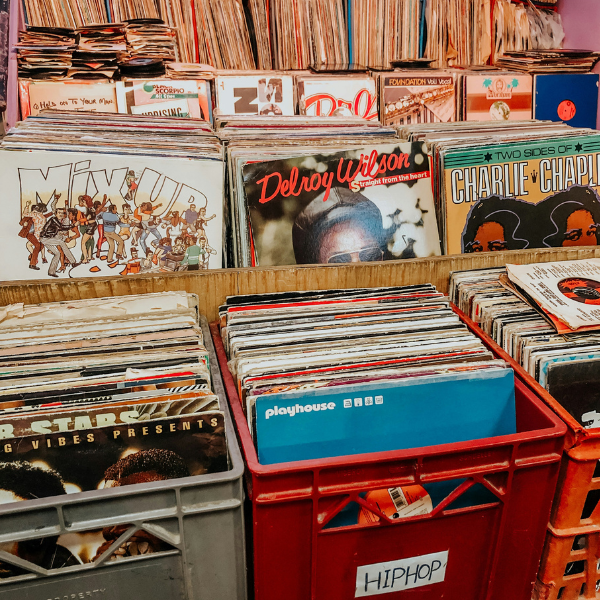
In the day, there was a milk crate of tapes. No sections or segregation. BDP and Schoolly D. De La and Run DMC. Off the Wall and Purple Rain. From jump, it was the mix. The innovation of Flash and other park jam scientists were revolutionizing the ways we’d listen and hear and feel. A crossroads of styles as uptown and downtown integrated in Manhattan where folks like Fab 5 Freddy, Larry Levan, Andy Warhol and other cosmopolitan bridge builders fused cultures from diasporas, local and global.
In Chicago, House Music provided a blueprint for our locally grown counter to the city’s deep socio-economic and racial divisions. The clubs and basement and loft parties beckoned to any open-minded body, a sense of radical inclusion, as House Historian Boogie McClarin might say. That sense and desire for the possibility of solidarity was some post-Civil Rights generational optimism. Hip Hop and the breakbeat, the bridge, which KRS said was over, was, in truth, growing international and inter-communal footing, cementing in Gen X-ers a utopian notion that the culture could connect us and build a future that looked different than the bleak and wack landscape we were inheriting.
Hip Hop made difference visible. And this was a good thing. It challenged the melting pot fallacy of the boomers, the lie of the color-blind society, and allowed us to not only see our distinctions but articulate the profundity and specificity of those facts of otherness. It provided an appreciation and reverence for the mores of the other, culture, person, neighborhood, city, style, etc.
Hip Hop was/is a tool of relational, sociological and interpersonal connectivity providing hood passes and real-life documentary insights into the practices of a being and way of life not our own. Wu platformed Kung Fu films, chess and martial arts philosophies and disciplines. DOOM furthered a generation of latch key kid’s fascination with comic book mythologies. Guru brought older jazz icons and international emcees into younger and newer fandom.
Of course, most commonly, the music became an Anthony Bourdain-type passport to travel without leaving your Walkman. From anywhere on the planet rock, we could hear first-hand accounts of Houston’s 5th ward, 8ball & MJG’s version of Memphis, and so on. How revelatory was a different version of life like in the notebook Ice Cube when NWA emerged as a sort of boy band and super group to tell the tales of LA’s experience in America’s drug war and war on working Black communities.
This site of possible solidarity not only helped a nascent Hip Hop culture grow and expand but also made inclusive and elastic spaces for the fresh. The incorporation of local slang, style and sound into a roving cultural practice made the particular iterations that much more thrilling in a way, because of the subtle and more pronounced differences of perspective and textual and textural languages. Hella becomes universal parlance because of the contributions of the Bay Area, and we are the better and fresher for it.
This can lead to appropriation of course, a sort of Starbuck’s Ube-ing of mass production but Hip Hop also has a deep resistance to the false. Holden’s child-like fear of the phony is demonstrated in the mantra and maintenance of keep it real, which is to say authentic. Real to culture and real to oneself. It also provides a space dig into your own inheritance, your own histories in which to wrestle and mythologize and make magic and mockery and story of.
Not only did my whiteness first become visible in Hip Hop spaces when I was younger and made me inquire and learn and wrestle with legacies and the maintenance of white supremacies, but it also made me ask the inevitable, who am I questions, that the poetic beckons. I have written extensively about using Hip Hop pedagogic tools to make inquiries into my own family and religious history as well as create blueprints utilizing these tools for others to do the same. Therefore imbedded in Hip Hop cultural practice is yet another example of radically democratic ideologies, where the individual’s participation in the cipher is expected and encouraged in varying forms and fashions and there is little to no, barriers of entry into the participation.
Hip Hop also gave me permission to dig into and appreciate all musics in part because of its composition and utilization of the history of recorded sound and in part because of its creative insistence on the fresh. All sound becomes a site of possible sample and remix and ready-made, repurposing, therefore an open ear approach to the world is to view it with an optimistic (emphasis on mystic) lens.
This is Hip Hop progressivism that can be transposed to peoples and palates and places and cultures and inquiries into a world that is larger than your block/city/culture/person/hood. And is that not implicit in the cultural ethos? The digging into the disparate matter of the universe in which to find inspiration from any corner or corner or person or (so called) sin or sound. All of it accessible in the cipher, which is to say zero, which is no thing, meaning nothing, which then becomes everything in sort of Eastern style turn of metaphysics. (Are you with me?)
This is to say that Hip Hop progressivism is interwoven through the history of the culture and music but also insistent in its maintenance and practice. One might argue that to be a creative you remain open to exploring and invigorating your practice and languages, and in the cultural practice of Hip Hop there is the encouragement to get open or get loose or in some spaces, particularly the B-boy/B-girl is encouraged to get free. Not to lose yourself in the music the moment, though in the cipher or improvisational moment of creation to lose yourself is another way to say be or become present, to connect in a way where the idea of the self feels inadequate because you are in tune, and therefore more than the boundaries of the I, but in deep communion with the world around the self that composes the self and therefore the self, dissipates in way, in a spiritual, meditative practice which is conducive to activities that demand a presentness like freestyling and dance and graffiti and basketball and jazz improve and a billion other things that make you feel here and alive.
And also. Yes, and also, word and in addition to the dissipation of self, Hip Hop Progressivism continues to root one in identities and histories and legacies but perhaps sees them in plurality. A true expansion of the binary, a resistance to the Cartesian / Western notion of duality, a sincere but not earnest or overly serious idea(s) that there are so many ways to be fresh, to be next, to flip and find and make relevant.
All this to say old heads who think there isn’t fresh shit out in the culture currently, or who retain nostalgia for their era of what they deem golden, have just gotten tired of digging, have cemented their ear drums and taste in a reactionary type of stance. Which in a way is fair. We like what we like. But imo this a non-B-boy stance. It is reactionary to think only your era, only your culture/place/people/city/block/nation is fresh. The logical conclusion of this type of reactionary approach to culture is a sort of jingoism and nationalism because it begins to restrict and circle the wagons around what we hold as dope and dear. And that exclusion, that no new friends type of mentality is detrimental to our personal growth and development as well as the growth and development and well-being of the culture.
Why aren’t there more spaces for inter-generational, inter-cultural conversations? In part it’s because the older heads have become out-of-touch reactionary uncles who sound like their grandparents dismissing the new and new-er and more youthful interpretations of the culture. And we know who we are. Older heads get self-righteous and shit and want to dis the new, but that is a mistake and misstep and certain sort of paranoid admittance of not wanting to be passed by and over. The cultural practice is robust and flourishing and as always must be dug, double entendre, and found and found out and sought after in the underground of the internet and far reaches of the bedrooms and basements and democratized sound labs where the music and culture is steadily and forever being pushed and innovated and made fresher.
And the new heads, of course, can be dismissive of history and wackness is spreading like the plague, always has. But who is it on that younger heads may not have reverence for the shit we like? Do we take time and patience to really hear and search for what they are into? The culture is a mirror, to paraphrase Mos Def. It is a vortex where we can see and be seen. And what better, fresher space than to continue our explorations into the fresh and next and progressive, while bringing our histories and legacies with us, not only as an undeniable truism, but too as a bag in which to dig and gain inspiration, a foundation on which we stand, and remix and remake to digest and make sense of the new and to be fresh. Yes yes, y’all. It don’t stop. Until we do. Unless we do. Until we stop doing the work of making and remaking and reimagining the world again and again, in our genius, on some G-shit. In our individual and communal magic. In our mad different methods.