


Out with the flannel, in with the camo: How the election is changing Seattleites wardrobes
In 2021, the general perception of camouflage was entirely different from now. On Jan. 6, many people inciting violence at the U.S. Capitol wore camouflage, making others question whether or not it was suitable to casually wear in public. Vanessa Friedman, fashion director for The New York Times, answered the question by asserting, “Your camo is not their camo,” and that as long as a person can demystify camouflage from its original intention, then they should feel comfortable donning it.
Ten Hiaraya, a Seattle-based fashion designer, attributes the resurgence of camouflage to designers from marginalized communities redefining parts of American culture that have historically and purposefully excluded them.
“The beauty in someone like me wearing and using camouflage in my designs is the juxtaposition of my identities,” Hiaraya said. “Camo, in the past, has been used for patriotism and [even] white power. For someone like me who is a minority in terms of my race, ethnicity and sexuality, it’s empowering to see like, ‘oh, he’s working with it.’”
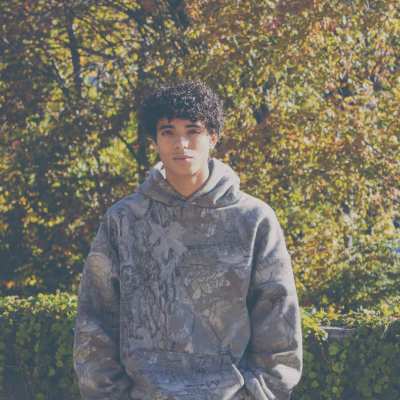
Seattle resident and student Gavin Muhlfelder wears camouflage as part of his personal style, but expressed he hasn’t always felt drawn to it.
“I always kind of looked down on camo,” Muhlfelder said. “I always saw it as something that was more American, more Midwestern [or] Southern American. More hunting, more conservative, stuff like that. I like camo, and even though we might not have the same political affiliations or ideas as those people, [it’s] something that is culturally American. It reminds me that I’m a part of a greater community; even though some things separate us, we’re still all American.”
Growing up biracial, Muhlfelder said he felt disconnected from the American identity. It was especially important to him to see the Harris-Walz campaign breaking down barriers to unite the American people by embracing aspects of American culture, like camouflage, that not too long ago was associated with the far right.
“But seeing [camouflage] kind of be seen by people that believe in diversity, believe in pushing for our rights as black people, as people of color and as Americans … it means a lot,” Muhlfelder said. “It makes me feel more welcomed in the country I was born in. It makes me feel like I actually can see myself in these states. I can go to these places where I might not be fully welcomed or wanted there…and feel like people would actually want me there.”
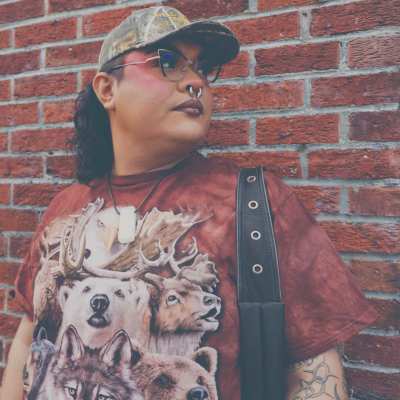
Muhlfelder’s view of how camouflage is used in politics today isn’t universal. Snohomish County resident Crispin Zamora understands the message the Harris-Walz campaign is making[1] [2] [3] [4] by releasing camouflage merch, but she believes it’s another surface-level political tactic to mainly draw in Millennial and Gen-Z voters. Zamora attributes the print’s popularity in younger age demographics to celebrities like Chappell Roan, who sold camouflage trucker hats as a part of her tour merchandise before the Harris-Walz campaign launched its version.
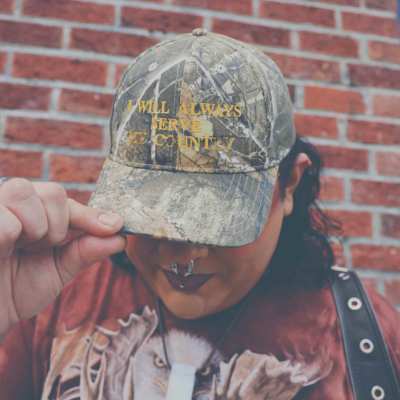
As a queer person, Zamora views wearing camouflage as making a statement in the spaces she navigates. During our interview, she sported a head-to-toe camouflage ensemble, complete with a billed cap that was originally embroidered with the phrase “I will always serve my country.” It now reads “I will always serve my country[5] .”
Zamora said when she saw the hat at a local thrift shop, she knew she had to have it.
“When I think of camo, I mainly think of [it as] manly [or] very butch,” Zamora said. “I feel like [wearing this hat] … it pushes that kind of notion of taking [it back]. I feel like a lot of heterosexual spaces take queer spaces and kind of hetero-wash them. It’s a pushback kind of way where I’m taking your thing that’s yours and I’m like fagging it up in a sense. I’m making it more unique and how I want to express myself.”
In the past, Zamora never wanted to wear camouflage clothing, but seeing the print’s power and how its message could be altered in different ways encouraged her to include it in her wardrobe. She attributes the camouflage that is sported in Seattle to her belief that many of its residents are queer. She believes that a majority of people are starting to perceive camouflage in a similar light as she does.
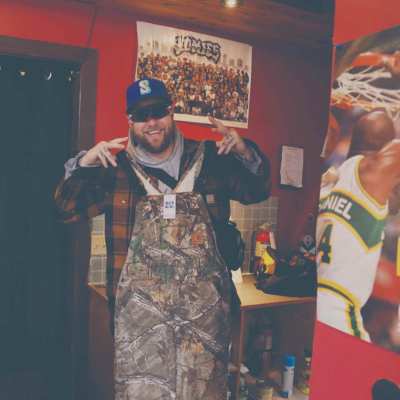
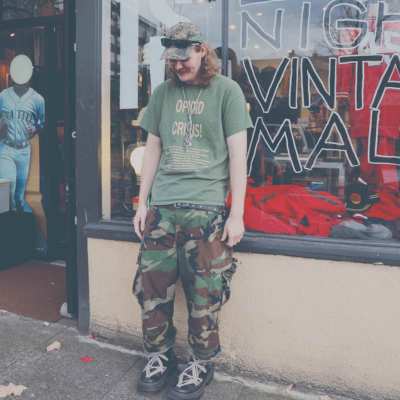
Among the baggy graphic T-shirts and sweaters at the Break Away Vintage Market and the Late Night Vintage Mall, two thrift shops that share the same building located in Capitol Hill, a shopper can come across a variety of articles in camouflage, from a set of overalls to rain jackets. Hans, a manager of the Late Night Vintage Mall, describes himself as a camouflage nerd — evident in his style, as, like Zamora, he wore a complete camouflage outfit when I met up with him. He’s worn camouflage since 2015 as a way to jab at what he describes as the “weird, Republican camouflage culture” and also, he says, to hide from others.
“I’m a six-three male, and it can be off-putting for people sometimes,” Hans said. “I think people are scared of larger people, and I tried to use [camo] as a way of hiding my size and who I [am]. It also worked against [me] because some people would be like, ‘Oh, he’s wearing camouflage [so] he likes Trump.’… if that’s what they want to immediately think, that’s their own thoughts. But we’re allowed to wear what we want and we’re allowed to vote for who we want at the same time. Just because we wear something doesn’t mean we’re going to vote for someone.”
Hans has worn camouflage since 2015 and still receives a mix of reactions from people throughout the region. Some people assume Hans is a Trump supporter which irks him. Hans said the way a person dresses shouldn’t be an assumption of their political preference. (Photo by Marian Mohamed.)
Hans also expressed how exciting it is to see more people in Seattle wearing camouflage and to witness its adoption into queer culture. However, Hans pointed out that the shift in how Seattleites wear and perceive camouflage may not be reflective of people who live beyond the city and might think otherwise.
“I love that it’s such a polarizing reaction, but at the same time, I think it’s necessary,” Hans said. “It goes to show that we can be who we want to be.”
Marian Mohamed is the associate editor of Real Change. She oversees our weekly features. Contact her at marianm@realchangenews.org.