
Paint The City
Spreading Love Through Color:
Missy Perkins and the Mission Behind Paint The City
Written by Kid Miles
In the midst of a year defined by uncertainty, unrest, and isolation, Chicago artist and community organizer Missy Perkins stepped forward with a mission: to reclaim the city with color, hope, and unity. In 2020, Chicago—like much of the country—found itself suspended between crisis and reckoning. A global pandemic emptied streets and shuttered businesses, while nationwide protests reignited conversations around racial injustice, equity, and public accountability. Fear, grief, and anger were not abstract emotions; they were visible everywhere, etched into boarded storefronts and plywood- covered windows.
Those boards became the defining image of the moment— symbols of closure, vulnerability, and unresolved tension. For many neighborhoods, they also represented silence. Paint The City emerged in that space not as decoration, but as interruption. Public art became a language when words felt inadequate, transforming blank wooden barriers into vibrant messages of solidarity, resistance, and resilience. What began as an urgent response to crisis would soon grow into one of Chicago’s most impactful community-driven art movements.
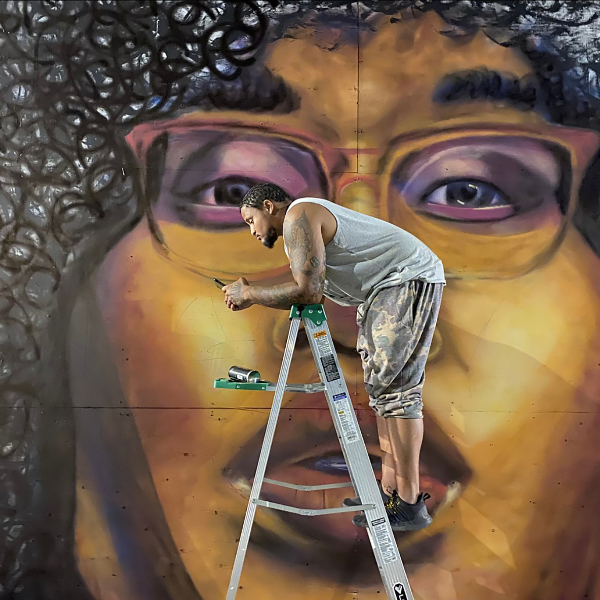
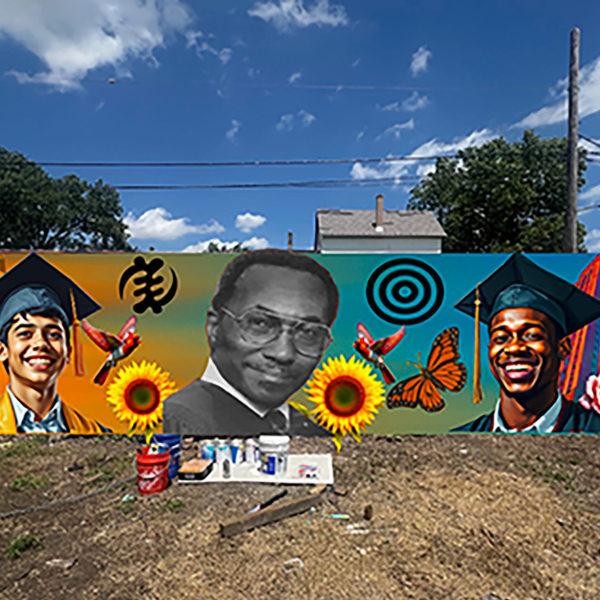
Launched at a time when boarded storefronts became the backdrop of pandemic-stricken Chicago, Paint The City carried a clear yet powerful vision: transform those blank panels into meaningful expressions rooted in the communities they served. Local artists were paired with local businesses, not to erase pain or gloss over trauma, but to acknowledge it —and then paint through it. Murals became invitations: to reflect, to grieve, to remember, and to imagine something better.
Looking back now, Perkins describes the initiative’s early purpose as immediate and necessary. But she also recognizes how dramatically that purpose has evolved. What began as “immediate crisis intervention,” she explains, has grown into “long-term community empowerment, healing, and cultural stewardship.” That evolution did not happen by design alone—it happened through listening. Through showing up. Through witnessing how people responded when art appeared where silence once lived.
“Our intention was simple,” Perkins says. “Connect local artists with local businesses and give the city something meaningful to look at again.” In those early months of 2020, that meaning arrived quickly. Artists worked under pressure, often with limited resources and timelines, creating urgent, expressive murals that responded directly to the emotional temperature of the moment. These were not polished commissions; they were acts of visual resistance.
The murals reclaimed neglected spaces and turned symbols of shutdown into platforms for expression. Each piece reflected the neighborhood it lived in—its anger, its pride, its grief, its hope. In many cases, the artwork sparked conversation before the paint had even dried. Passersby stopped. Questions were asked. Stories were shared. The walls were speaking again.
Each mural served as more than decoration—it was a declaration. Declarations of presence. Of remembrance. Of solidarity. But as weeks turned into months, the work began to deepen. Paint The City moved beyond rapid-response painting and into a more intentional phase—one shaped by reflection and responsibility.
Artists involved in the project began to recognize that their role was changing. What started as action painting evolved into community curation. “The role has shifted,” Perkins notes, “from personal artistic expression to one of advocacy—using art to amplify marginalized voices and promote equity.” That shift marked a turning point, redefining not just the artwork itself, but the responsibility of the artist within public space.
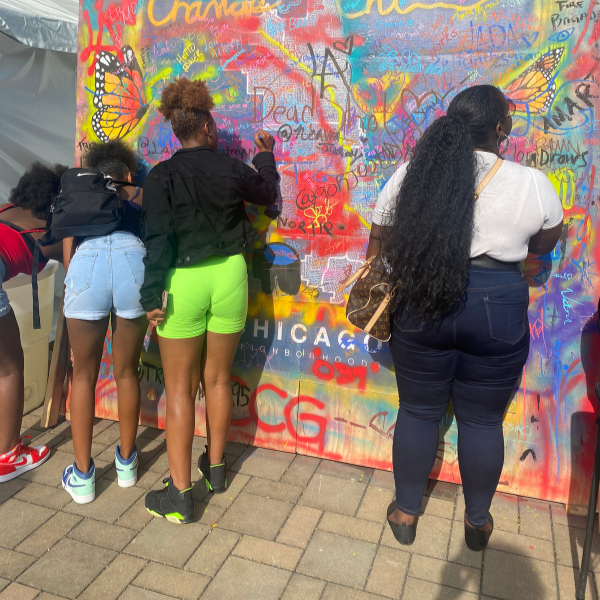
This transformation also reshaped how communities interacted with the murals. Beyond visual impact, Paint The City became a bridge between people who may have never crossed paths otherwise. Business owners opened their boarded windows not just to color, but to conversation. Neighbors lingered, watching artists work, sharing encouragement and sometimes their own pain. These moments—often spontaneous—became just as important as the finished murals themselves.
In these exchanges, the city reclaimed something vital: a sense of shared ownership. Residents began to see their own stories and cultural identities reflected on their walls. That reflection fostered pride, safety, and stewardship of public space. Murals were no longer temporary gestures; they became landmarks of collective memory—markers of what a community had endured and how it chose to respond.
For the artists, Paint The City created a new framework for creative responsibility. Many entered the project focused on visual impact, but left with a deeper understanding of art’s civic role. Visual resistance gave way to sustained expression —an ongoing commitment to community engagement rather than a one-time response to crisis.
At the heart of the movement lies a belief in the transformative power of public art—not just to beautify a block, but to ignite conversation, foster connection, and inspire action. Artists’ voices, Perkins emphasizes, deserve to be heard—especially in moments when communities risk being silenced or overlooked. Paint The City offered a platform where those voices could speak clearly, collectively, and without dilution.
As the world slowly emerged from the chaos of 2020, Paint The City refused to fade into the background. Instead, it expanded—recognizing that the need for creative healing did not disappear when restrictions lifted. If anything, it intensified. The emotional and social toll of isolation lingered, particularly among young people navigating interrupted education and prolonged disconnection.
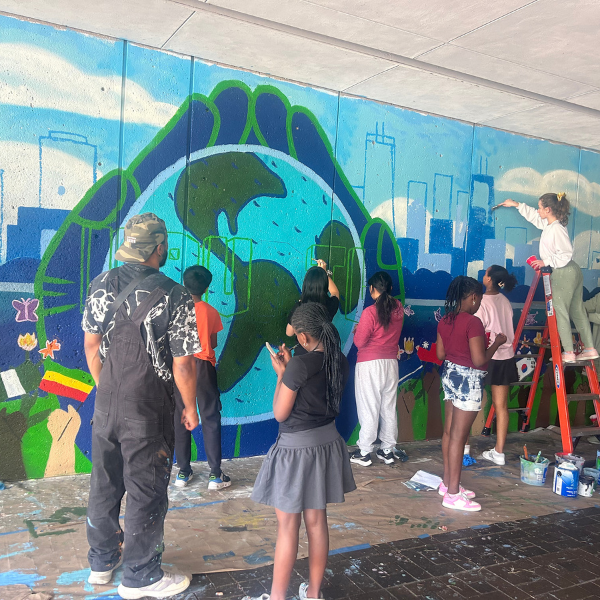
That realization led to the launch of Paint The Schools, an initiative born out of Paint The City’s first MLK Day of Service with Chi Gives Back. The program was designed to counter social disengagement by bringing art directly into educational spaces. Hallways, classrooms, and common areas became canvases for affirmation, storytelling, and imagination.
“This program launched as a way to give kids a healthier learning environment,” Perkins explains, “and to overcome the social disengagement left behind by the pandemic.” Since its launch, Paint The Schools has reached more than 20 schools across Chicago, operating as an all-ages initiative that centers creativity as a tool for emotional and communal well-being.
The expansion into schools reinforced Paint The City’s broader mission of cultural stewardship. Art was no longer just responding to crisis—it was shaping environments where young people learn, grow, and define their identities. In this way, Paint The City positioned itself not just as an arts organization, but as a long-term investment in Chicago’s cultural future.
For communities, this shift marked another evolution—from passive observation to active ownership. Students, educators, residents, and families became participants rather than spectators. The murals belonged to them. They reflected their values, histories, and hopes. With that ownership came responsibility—a collective commitment to protect and honor the spaces transformed by art.
Today, Paint The City stands as a long-term, community- focused platform that uses art to foster unity, pride, and social change. Its growth from a necessary, temporary response into a sustained artistic movement speaks to the power of intention guided by empathy. What began as a reaction to boarded windows has become a model for how cities can heal themselves through creative collaboration.
With Missy Perkins leading the charge, Paint The City proves that art isn’t just something we hang on walls. It is something that builds legacy. Something that invites dialogue. Something that holds space for grief while making room for hope. In a city shaped by resilience, Paint The City continues to paint not just surfaces—but futures.